Nineteen boards. Nineteen classics. One game.
The arcade wasn't some wholesome family destination. It was dark, it was loud, and the carpet smelled like it had been there since the building was poured. Quarters were currency. You'd walk in with a dollar and have to decide what to spend it on, because four games was all you got if you were bad at any of them.
And you were bad at most of them. That was the point. These machines were designed to eat your money, and the only way to make a quarter last was to get genuinely good. Not "I watched a YouTube tutorial" good. Good through repetition, through failure, through standing behind someone better than you and watching what they did differently.
The games that survived from that era did so because they were perfectly designed. Not pretty. Not story driven. Just mechanically flawless in ways that most modern games can't touch. A few of them became the foundation for everything that came after.
Every game in the arcade taught you something different, even if you didn't know it at the time. Looking back, these weren't just entertainment. They were masterclasses in game design compressed into a few kilobytes of code.
Breakout gave us the core loop that still works forty years later: ball, paddle, bricks. The beauty of Breakout was how much depth lived inside that simplicity. Angle of contact mattered. Where you hit the paddle changed the trajectory. Once the ball got above the wall and started bouncing around in the empty space at the top, you just watched and hoped. It was the first game that made you feel like a physicist and a gambler at the same time.
Space Invaders taught us about escalating tension. That formation started high and wide, crawling side to side, dropping one row closer with every pass. The sound sped up as fewer aliens remained. Your shelter eroded. The math was against you from the start, and the only question was how long you could hold. Every good tower defense game, every wave survival mode, every horde shooter owes something to those 55 pixelated aliens.
Pac Man was about territory and escape. You were always outnumbered, always being hunted, and the maze never changed. What changed was your understanding of it. Once you learned the patterns, the ghost AI, the safe spots, a single quarter could last an hour. Pac Man rewarded study more than reflexes, which was radical in 1980.
Galaga was Space Invaders with swagger. The aliens didn't just march. They dove at you in formation, peeling off in spirals that demanded you track multiple threats at once. And the dual ship mechanic, letting the boss alien capture your fighter so you could rescue it and double your firepower, that was one of the first real risk reward decisions in gaming.
Frogger was pure anxiety. Every lane was a new calculation: speed, timing, distance. The logs moved one way. The cars moved another. The turtles submerged without warning. Frogger was the first game that made you realize a game could be stressful in the exact same way crossing an actual busy street is stressful, just with cuter graphics.
Centipede was chaos management. That segmented centipede wound through the mushroom field, and every segment you shot turned into another mushroom, which meant the path changed every time. The trackball gave you speed and precision that a joystick couldn't. No other game felt like Centipede under your hands. The spider bouncing diagonally through your space, the flea dropping straight down leaving mushrooms in its wake. It was controlled panic.
Donkey Kong was platforming before platforming had a name. You jumped barrels. You climbed ladders. You learned the timing. And you did it all for a character standing at the top of the screen who never seemed particularly grateful. Donkey Kong proved that a game could have a character, a narrative, a sense of place, and still be brutally hard.
Pong started everything. Two paddles, one ball, one simple question: can you return it? Stripped to its absolute minimum, Pong proved that competition between two humans, even through the most abstract interface imaginable, was inherently compelling. Every sports game, every fighting game, every competitive multiplayer match descends from those two white rectangles.
Q*bert was deceptively simple. Hop on the cubes. Change their colors. Don't fall off. Don't get caught. The isometric perspective made spatial reasoning harder than it looked, and the enemies, Coily, Ugg, Wrong Way, all moved in patterns that punished carelessness. Q*bert was the game that made you realize you were worse at thinking diagonally than you assumed.
Bricks of Zai does something that sounds like it shouldn't work: it takes the core ideas from all of those classics and rebuilds each one as a brick breaking game board. Nineteen boards total, each one designed around a different arcade game or concept.
This isn't a retro pixel art skin on a generic game. Each board genuinely plays differently because each one borrows the specific mechanic that made its source material great. The physics change. The rules change. The way you think about the ball and the paddle and the bricks changes from one board to the next.
Here's what some of those boards actually feel like.
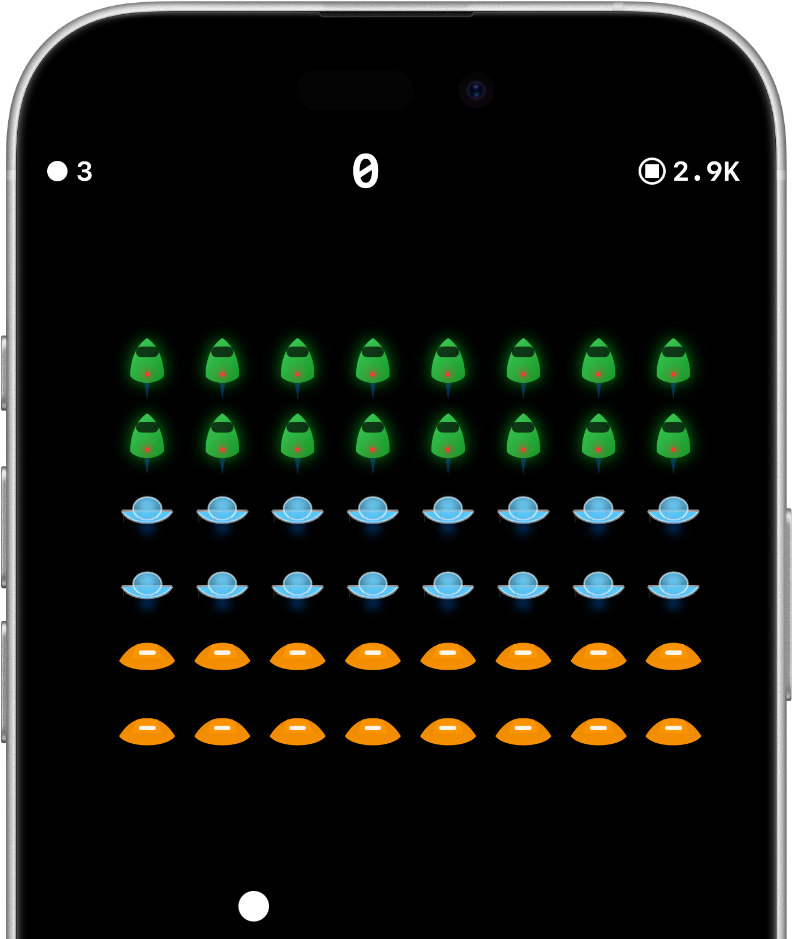
The alien formation descends. You know this. You've felt this. That slow, inevitable march downward while you try to clear them out before they reach the bottom. The Alien Landers board in Bricks of Zai recreates that exact tension. The brick formation moves like the invader fleet, inching closer with every pass, and your ball is your only weapon. Miss too many shots, waste too much time letting the ball bounce aimlessly, and they'll reach you. The urgency is real in the same way Space Invaders urgency was real: not through a timer on screen, but through watching your margin for error physically shrink.
Rush Hour is the Frogger board, and it captures the thing that made Frogger maddening: lane based traffic that you have to navigate through. The bricks move in lanes, each at different speeds and in different directions, and getting your ball through the gaps requires the same timing and spatial awareness that Frogger demanded. You're watching patterns, looking for openings, and committing at the exact right moment. Every miss feels like stepping into traffic a half second too late. Every clean pass through a moving lane feels like the relief of reaching that log on the other side.
This one is beautifully simple. There's a computer controlled paddle at the top of the board that returns your ball back at you. Pong, inside a brick breaker. You're not just hitting bricks. You're playing against an opponent who's hitting back. The dynamic changes completely when the ball can come at you from above without warning, returned by an AI paddle that doesn't miss often. You have to break through the bricks while managing a rally, and the back and forth rhythm is unmistakably Pong.
Barrels roll across the board. Your ball has to navigate around them or through them. The rolling barrel obstacle pattern borrows directly from Donkey Kong, and it introduces the same kind of timing puzzle: the barrel is coming, you know its path, and you need your ball to be somewhere else when it arrives. Barrel Blitz adds a layer of physical obstacle avoidance to the brick breaking formula that feels entirely different from any other board.
A segmented centipede winds through a field of mushroom obstacles. Every segment you hit with the ball splits the centipede and drops a new mushroom, changing the terrain. If you played the original, you know this feeling: the board is alive, constantly reshaping itself based on your actions, and the centipede is always finding a new path toward you. The mushrooms aren't just obstacles. They're the history of every shot you've taken, for better or worse.
Some boards in Bricks of Zai don't map to a single arcade game. They take concepts that existed across the era and turn them into something new.
Shifting gravitational fields bend the trajectory of your ball mid flight. The ball curves, accelerates, slows down, pulls toward invisible points in space. Planning a shot in Gravity Wells means thinking about physics in a way no standard brick breaker asks you to. Your ball doesn't travel in straight lines anymore. It arcs. It swoops. Sometimes it loops. You have to read the gravity map and work with it instead of fighting it, which turns every shot into a puzzle about trajectories and orbital mechanics.

Bumpers. Spinners. Targets. A jackpot system. The Pinball board turns Bricks of Zai into something that feels like a pinball table viewed from the wrong angle. The ball bounces off bumpers in ways you can't fully predict, spinners redirect it, and hitting the right sequence of targets triggers jackpot scoring. If you've ever lost an afternoon to a real pinball machine, watching the silver ball ricochet between bumpers while the score climbs, this board captures that exact energy.
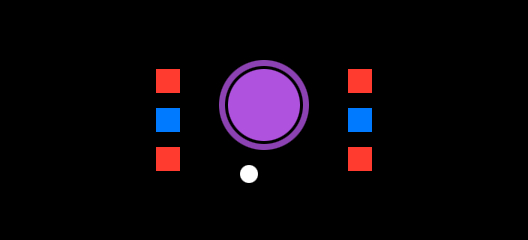
Entangled qubits. Quantum tunneling. Bricks that exist in superposition until observed. The Quantum Reality board is the wildcard. It takes the concepts of quantum mechanics and applies them to brick breaking, which means the rules you've learned on every other board don't fully apply here. Bricks appear and disappear. The ball tunnels through walls it shouldn't be able to pass through. Hitting one entangled brick affects its partner somewhere else on the board. It's disorienting in the best way.
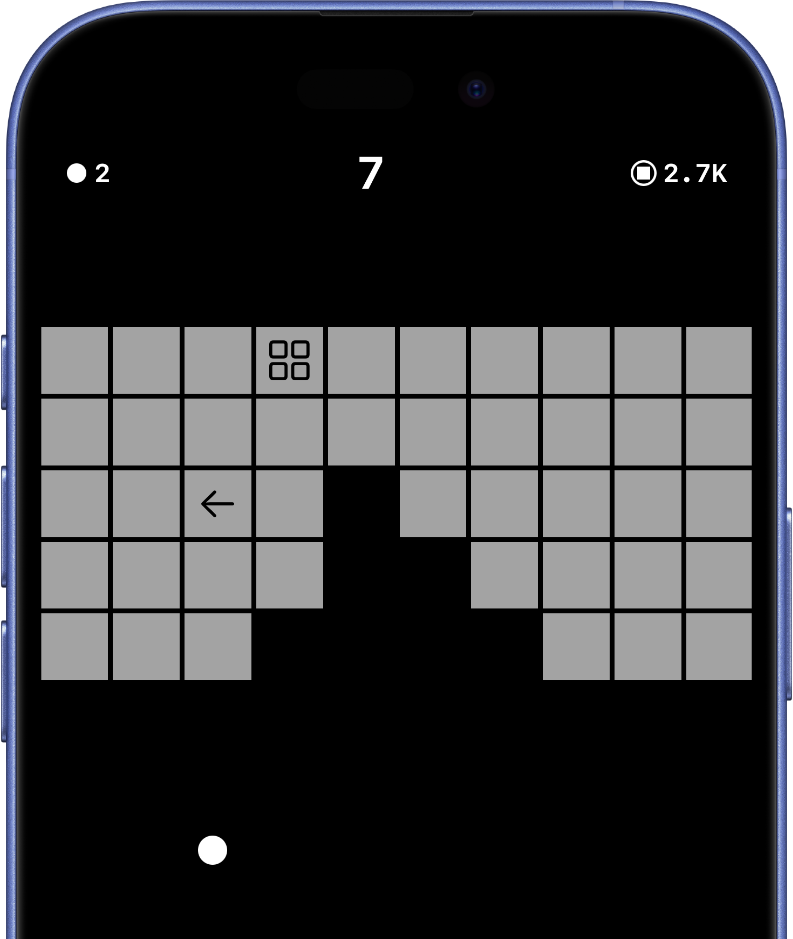
Character glyphs fall from above, and you need to destroy them before they land. This is the Space Invaders and Galaga energy applied in a completely different direction. Instead of shooting upward at a formation, you're watching a cascade of falling symbols and trying to clear them with your ball and paddle. The pace builds. The density increases. It's the same escalating pressure those classic shooters perfected, channeled through the brick breaking mechanic.
The board fights back. An enemy turret sits on the field and actively interferes with your game. Bricks change color, and the turret fires at your ball, knocking it off course. This one pulls from the Q*bert school of design: here's a simple objective, now here's everything working against you. The turret adds an adversarial element that makes every shot feel contested.
Dynamic weather effects alter the ball's physics in real time. Wind pushes the ball sideways. Rain changes its speed. The conditions shift as you play, so the strategy that worked thirty seconds ago might not work now. It's the kind of board where adaptability matters more than precision, because the rules keep changing underneath you.
The original arcade games worked because they were built for short sessions with deep mechanics. You dropped a quarter, you played for two minutes or twenty, and you were done. That structure maps perfectly to mobile gaming in a way that most modern mobile games don't understand.
Bricks of Zai is free on iPhone and iPad. You start with several boards unlocked, and you earn Zai coins through gameplay to unlock more. No subscriptions. No energy timers. No ads interrupting you every thirty seconds. Just a game that respects the same design philosophy the arcades ran on: make the game good enough that people want to keep playing, and let them play.
Your purchases and progress sync across devices through iCloud, so the boards you've unlocked on your iPhone are there on your iPad too.
Each board takes a few minutes to play. You can pick it up on the train, in a waiting room, during a break. And because every board plays differently, because the Centipede board feels nothing like the Pinball board feels nothing like Gravity Wells, there's always a reason to come back. Not because the game is begging you to with notifications and daily rewards. Because the boards are genuinely fun and you haven't beaten all of them yet.
Here's every board in Bricks of Zai and the classic it draws from:
Classic is the traditional Breakout board. Ball, paddle, bricks. The foundation. Fortress arranges bricks in castle architecture patterns that require you to break through layered defenses. Mountain stacks bricks in pyramid formations. Diamond uses a geometric diamond shape with reinforced bricks that take multiple hits. Shields Up is a puzzle board with a shielded center you need to break through.
One Way has directional bricks that can only be hit from one direction, inspired by Q*bert's isometric puzzling. Zai's Paddle is the Pong board. Zai's Turret adds an enemy turret with color changing bricks. Gravity Wells bends your ball's path with gravitational fields. Harmony has falling glyphs in the tradition of Space Invaders.
Pinball fills the board with bumpers, spinners, and targets. Alien Landers is the Space Invaders board with a descending formation. Rush Hour is the Frogger board with lane based traffic. Spiders puts web climbing spiders on a radial web structure. Quantum Reality uses entangled qubits and quantum tunneling.
Zero G Cookie Jar floats cookies in zero gravity like an Asteroids field. Centipede has the segmented centipede and mushroom obstacles. Under the Weather changes ball physics with dynamic weather. Barrel Blitz rolls barrels across the board like Donkey Kong.
Nineteen boards. Nineteen different ways to break bricks. Each one designed to feel like its own game within a game.
Nineteen arcade classics, one brick breaker. Free on iPhone and iPad.